
Business Systems · Growth
Your Website Should Do More Than Look Good
A good website should look professional, but that is only the starting point. The strongest websites are built around what a business actually needs to achieve — generating enquiries, taking bookings, processing payments, managing customers or supporting day-to-day operations.
A modern website has to do much more than make a business look professional.
Design matters. Your website should feel credible, work properly on every device and represent your brand at the level you want customers to perceive it. But a website that looks impressive and does nothing to support the business behind it is only doing half the job.
The starting point should always be a simple question:
What does this business actually need its website to do?
For one company, that might be generating qualified enquiries. For another, it could mean taking bookings, accepting payments or helping customers choose the right service. Some businesses need considerably more — connecting the public website with internal systems used by staff every day.
That is where bespoke website development becomes much more valuable than simply choosing a template and changing the colours.
Start with the business, not the website
Before thinking about layouts, animations or individual pages, it is important to understand how the business operates.
Who are the customers? What are they trying to achieve when they arrive on the website? What normally happens after somebody makes contact? Where does unnecessary administration happen? Are customers repeatedly asking the same questions? Could part of the sales or operational process be handled digitally?
Understanding those things can completely change what the right website looks like.
A service business might benefit most from clear conversion routes and a straightforward enquiry system. A company dealing with high volumes of bookings may need an online booking process connected to its internal workflow. Another organisation may require customer applications, online payments and ongoing case management.
The technology should be shaped around the business rather than forcing the business to work around the technology.
A website can become part of your operation
One of the biggest misconceptions about web design is that the project ends when the customer submits a form.
It does not have to.
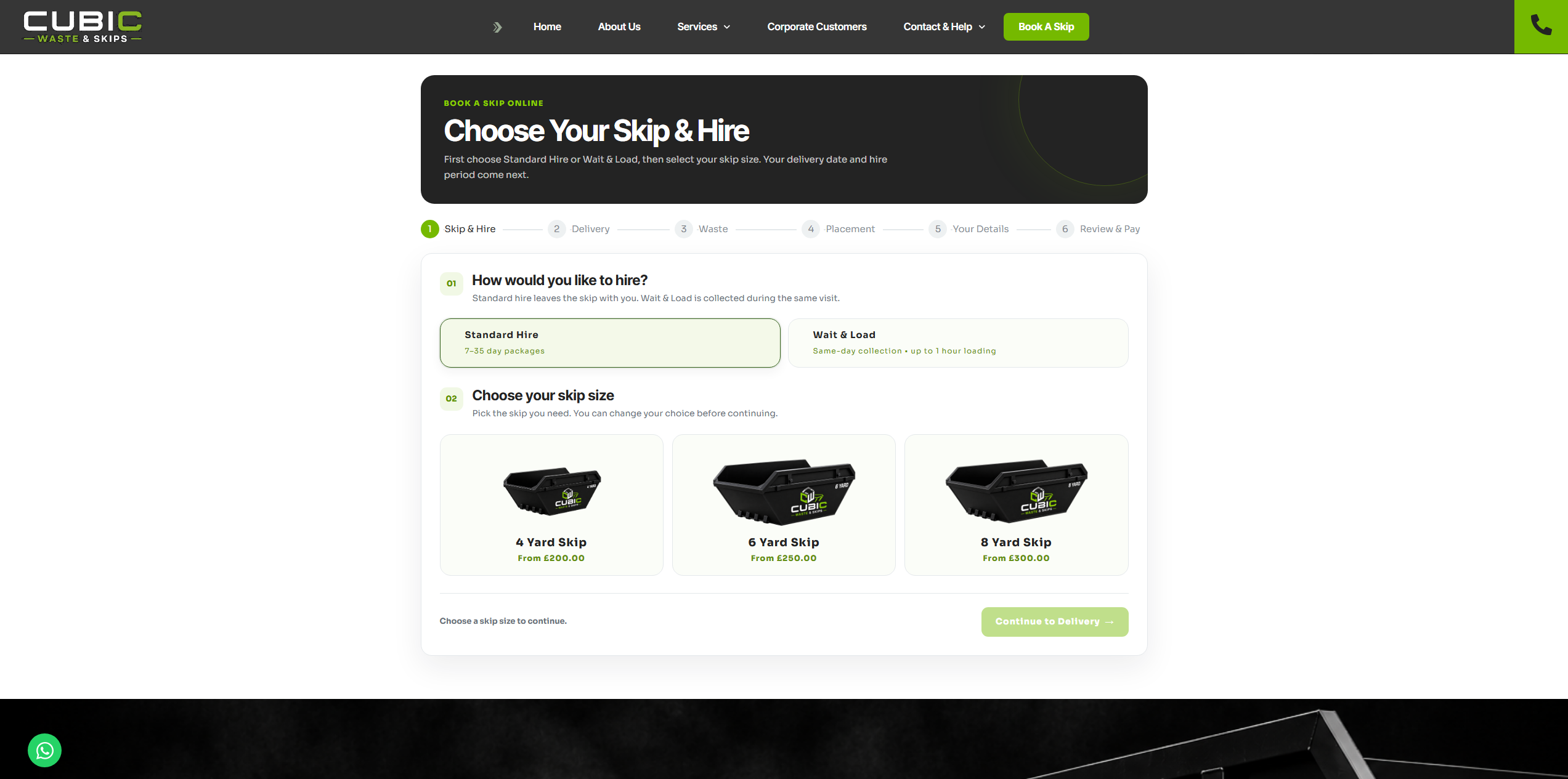
For Cubic Waste, Phoenix Pixel Studios developed a bespoke website and online skip-hire booking experience, but the project continued considerably further. We also created Cubic Operations, a custom business system that supports the company’s internal workflow, including bookings, driver assignments, deliveries, collections and payment management.
The public website and the operational system work as parts of the same wider platform.
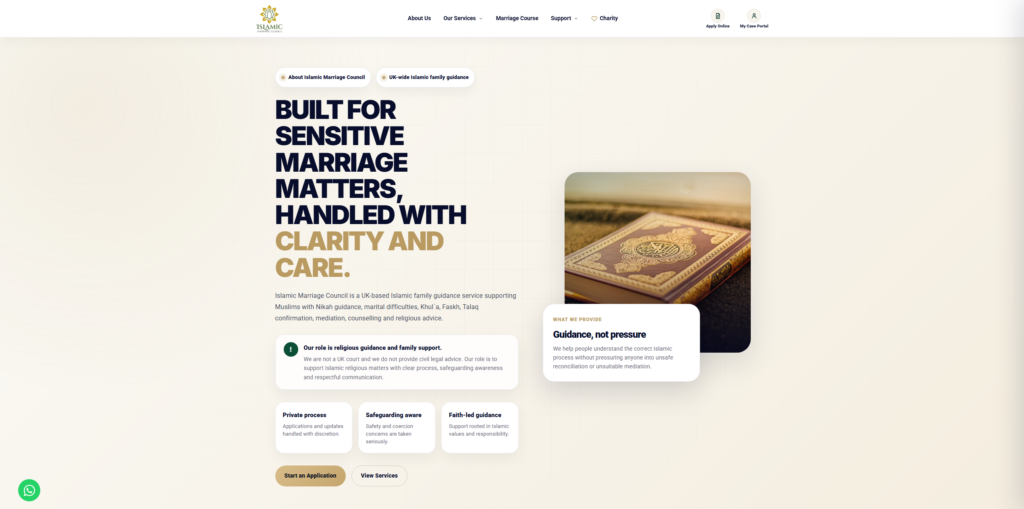
We took a similar approach with Islamic Marriage Council. Alongside its public website, we developed an online application and payment journey, a bespoke system for managing applicants and ongoing cases, branded communications and a custom mobile application experience.
Neither project could have been properly solved by simply installing a theme and adding a contact form.
The website had to understand the business behind it.
Conversion should influence the design
Even when a business does not need a complex internal system, its website still needs a clear purpose.
Every page should help answer the questions a potential customer is likely to have:
What does the company do? Is it relevant to me? Why should I trust them? What happens next? How do I get started?
Good design makes those answers easier to understand.
Calls to action should appear where they make sense rather than being added randomly. Mobile users should be able to call, message, book or enquire without fighting through the interface. Important information should have clear visual hierarchy, and unnecessary friction should be removed from forms and conversion journeys.
The objective is not simply to make somebody say, “That website looks nice.”
The objective is to make the right person understand the business and take the next step.
SEO needs to be considered from the beginning
A visually impressive website has limited commercial value if the right people cannot find it.
That does not mean stuffing keywords into every heading. It means building a sensible website architecture where individual pages have a clear purpose, important services have enough depth, internal links help users and search engines understand the site, and technical foundations do not create unnecessary barriers to crawling or performance.
Content, development, user experience and SEO should support one another.
Treating SEO as something that gets bolted onto a finished website later often means revisiting decisions that could have been made correctly from the beginning.
The website should be able to grow with the business
Businesses change.
New services are introduced. Teams grow. Marketing channels change. A company that currently handles every enquiry manually may eventually want online booking, payments, customer accounts or an internal management system.
A bespoke website should leave room for that progression.
It does not mean building every possible feature on day one. In many cases that would simply create unnecessary complexity.
It means creating the right foundations so useful functionality can be introduced when the business genuinely needs it.
That is very different from building a site that has to be replaced every time the company moves forward.
Build around the outcome
There is nothing wrong with wanting a beautiful website. We want Phoenix websites to look exceptional too.
But the design should support something bigger.
The strongest digital platforms combine brand, user experience, technology, conversion and growth around what the business is actually trying to achieve.
Sometimes the right solution is a focused lead-generation website.
Sometimes it is an e-commerce platform.
And sometimes what begins as a website project becomes an online booking system, customer journey, internal business platform or mobile application.
The important part is not starting with a predetermined solution.
It is understanding the business first and building what it genuinely needs.
Related work
See the thinking in practice.

Related services
Related locations
Keep reading
More from Phoenix.

Why Isn’t My Bradford Business Showing in Google Maps?
A practical look at relevance, distance, prominence, Google Business Profile quality, reviews, website signals and local-search consistency.
Read
How Long Does SEO Take for a Bradford Business?
Why SEO timelines vary, what can improve quickly and what Bradford businesses should expect when building organic and local search visibility.
Read
Bespoke Website vs Template: What Should a Bradford Business Choose?
When a template is enough, when bespoke development makes more sense and how Bradford businesses can choose the right level of website build.
Read